Sunday, April 17, 2016

AMPATH Internship


Taken from Joyfulheart.com
For the past week, I’ve been settling into my new home for the month. The place is called Eldoret, and the mission is to interact with as many people and public health concepts as is humanly possible within such a short amount of time. While here, I am participating in an internship with a consortium called AMPATH. To start, I’ll give you a brief overview of what my internship is concerning. AMPATH was originally an acronym for the Academic Model for Prevention and Treatment of HIV/AIDS. It has since developed however, to stand for the Academic Model for Providing Access to Healthcare. Despite what is commonly understood, AMPATH is not an NGO, but rather a consortium of North-American schools, Moi University Medical School, and Moi Teaching and Referral Hospital (which was only the 2nd public hospital in Kenya), and was founded during President Daniel arap Moi’s era in Eldoret, Kenya. AMPATH serves as the overarching connection between all of these places, but has no employees as it isn’t technically it’s own entity.


In my mission to interact with as many people as possible, I’ve already succeeded in meeting with American medical students, residents, Kenyan outreach coordinators, children, parents, and two amazing people who helped found AMPATH at the very beginning. During this first week, I’ve also had the opportunity to get acquainted with my surroundings, and figure out where I will best fit in for the next three weeks. One of the places that I’ve already visited and felt an instant connection to is called the Amani Shelter (Amani means hope). This place is run by two women and originated as a women’s shelter, but has since turned into a home for children without homes as well. I went with my supervisor and a friend of hers to see how the micro-business that she helped the shelter to start was coming along. Essentially, she donated >30 healthy chickens ready to begin laying to the shelter, as well as laying beds for the chickens, and the initial food for them. The goal is to create a sustainable source of income for the shelter by having the women sell the eggs laid by the chickens. With the money they earn, they can continue to provide for the chickens, and ultimately have leftovers to help with the rest of the cost of the shelter. They also hope to have a rooster soon so that they can begin breeding more chickens, allowing them to eat the ones that are currently providing the eggs, and allowing the cycle to continue and expand.


       From plastic bag,       to plastic yarn,         to plastic purse
Being the only SLU student in Eldoret, I didn’t have much to do over the weekend, so I reached out to the Amani shelter and asked if I could return to help out with anything that they needed, volunteering as I do frequently in the U.S. This visit was one of my most memorable moments in Kenya so far because it really helped something to click for me. One of the mothers told me that they are always so so happy to have visitors, and all of a sudden I had a new perspective. Throughout the whole semester I’ve felt as though people look at me, and because of the color of my skin, assume that I’m there to help in some way, when in reality I’m simply a student. In my hours at this shelter, I was introduced and seen as a visitor, as a friend. Sure in this instance, I had gone with the intent of helping which was much different then my motive for the rest of my activities this semester (to learn), but I was welcomed as one of the family they’ve formed there. With that being said, I was able to do something tangible. The women create bags, from grocery style bags, to beach bags, to pocketbooks. These bags are made 100% from plastic grocery bags, and are crocheted into these more sustainable bags, resulting in benefits for our environment as well as another source of income for the shelter. When I got back to my home, I took all the plastic bags I had and made the yarn from them as I’d been taught at the shelter to bring to them, so that was a great way to wrap up the weekend!


In addition to that experience, at the Moi Teaching and Referral hospital itself, I’ve had many opportunities to entertain/teach some children which are either patients, siblings of patients, or children who’ve been abandoned at the hospital. It never ceases to amaze me the mannerisms of Kenyan children, which I’ve had the opportunity to witness in various settings, but more concentratedly, here. Even in the instances where there is nothing to play with/do, the children do not cry out for attention. It isn’t even necessarily that they find ways to entertain themselves, but rather just find themselves doing nothing, and being okay with that. They are extraordinarily peaceful and respectful. Of course a small part of me would like to believe that this is simply a genetic trait of Kenyans, or perhaps the climate is just conducive to this sort of behavior. But I know it has more to do with the way they’re raised and the fact that they really have no choice, which is truly a double-edged sword. Historically, the reason for having children in many Kenyan communities has been practical - to have more people to help provide for/protect the family. There is therefore, no need or time to coddle the children. The Maasai boys for example, begin herding cows by themselves as early as 6 years old!! In America, at 6 years old, children are still crying when they have to let go of their mom’s hand for school. The independence and resilience of these children inspires me beyond belief. While the fact that they are able to hold themselves in such a mature manner is something to aspire for, the circumstances leading to this result have to be considered as well. As I’ve already mentioned, some of the children that I’m interacting with have been abandoned at the hospital, others have fallen into boiling oil, burning almost their entire bodies, spending sometimes years in the hospital waiting to heal. If their independence comes from factors like these, is it really worth the cost? But then again, do all of these factors play a role in why Kenya is among the fastest growing economies in sub-saharan Africa (according to the world bank)? Because the upbringing of Kenya’s children lends to perseverance, and ultimately great success? There is no easy answer, all I know for sure is that what I gain from this experience will be far beyond the scope of what I came to AMPATH to learn.


Although from this internship, it’s certain that I will gain a better understanding of the way global and public health functions, I believe that even more importantly, I will glean something so vitally important to human nature. When you have to be brave and strong - you are. When you have to be independent - you are. When you have to be idle for hours on end - you do so without complaining. These children are the epitome of these traits, and I’m so grateful to have the opportunity to spend time with them, and to learn about their dreams and goals, and know that even though all of the odds are against them, if anyone can make it happen, it is these children. My only hope is that I will be able to inspire those that I’m working with, even an inkling of the amount that they are inspiring me.


More to come on the outreach programs that I will have an opportunity to participate in the next week!
-Beca

Sunday, March 27, 2016

Amboseli National Park

A short picture story, inspired by my life
by Rebecca Webber


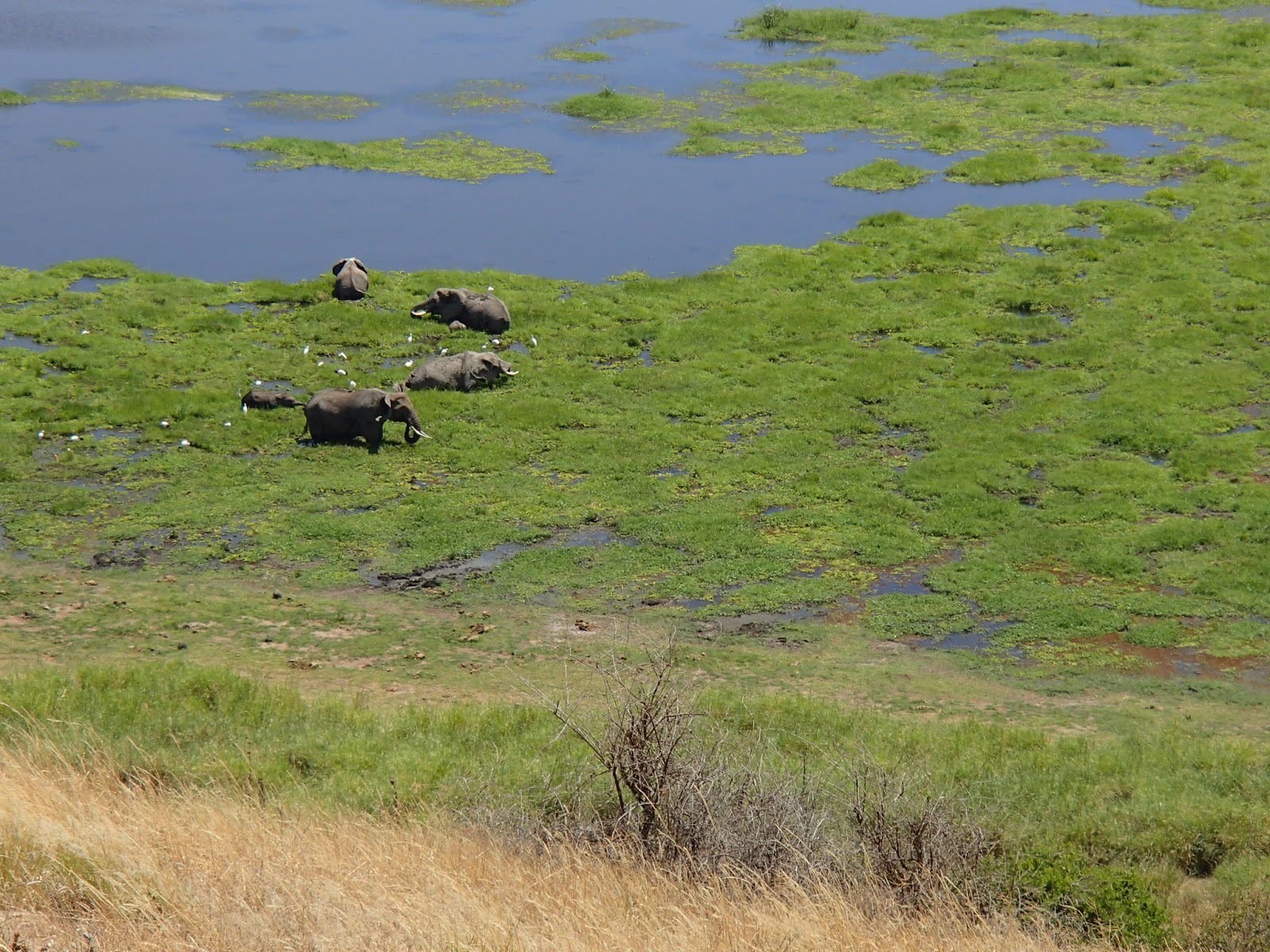
Once upon a time, not too long, there was a mom elephant and a baby elephant named Dreana, and Ereccab, respectfully. They resided in Amboseli National Park in Kenya. Moma Dreana had been known throughout the community to constantly keep the baby at her heels, and most of the time Ereccab was happy to do so because her mom had never led her astray before. Today however, she felt like something would be different, and when they set out that morning, she did so with a pep in her step for excitement of what was to come.


As they crossed the strange road where a bunch of alien like creatures stood out of a giant contraption with huge eyes focused on them, Ereccab thought to herself, 'I want to go on an adventure today.' 


So after crossing the road, she caught up to her mom and asked, "Can I please find the watering hole on my own today?" to which her mom responded "Are you sure honey? We always go together." But the baby elephant felt like she was ready, and so she insisted. This was going to be her opportunity to accomplish things all by herself.


Reluctantly, moma Dreana left her little baby girl behind with hopes that she would find her way safely. Of course she'd taught her daughter about the predatory lions and hyenas, and could only hope that Ereccab had been listening to all of those lessons and wouldn't be too naive to appreciate certain safety precautions. Ereccab wasn't nervous at all though. She'd been preparing her whole life for this adventure. She ran off immediately and found herself among a group of animals who didn't look anything like her!


After a bit of thought, she recognized them as being zebras. Ereccab had never seen so many on her own since she'd always been trailing so closely behind her mother. She wondered what other kinds of things she'd missed from her lack of independence, but was glad that she'd finally gotten out from between her mother's legs. Enthusiastically, she greeted the zebras with the same greeting she'd always greeted her family, but it seemed to frighten her new friends!


The zebras began turning to run in the other direction. Ereccab wondered to herself if she had done something wrong. She'd never really interacted with other animals before, so perhaps, she thought, her greeting meant something different in their culture. Rather than running back to her mom and the familiar however, she decided to observe the next animals she came across, figure out how they interacted, and then try to implement that instead of her own family's greeting.


Before she knew it, Ereccab came across an antelope. She watched and watched but was unable to determine the antelope's cultural norms because he wouldn't stop looking at her!! It appeared that neither was going to be able to ascertain anything from the other because the antelope was too hesitant of the new visitor, and Ereccab was trying so hard to blend in when it was clearly not possible, no matter how hard she tried.


Finally, the antelope greeted Ereccab, and the elephant excitedly responded in kind. The antelope offered to show her the way that they found the watering hole. Since the elephant was in unfamiliar territory now, she decided that her best option was to embrace the opportunity to learn a new way to do something, recognizing that her mom and familiy's way was not forcibly the best or even only way to accomplish arriving at the watering hole. She hopped into line with the antelopes, trusting that they would lead her to the right place.


Before she knew it, they had led her directly to her family! Moma Dreana got up so fast from laying in the water, and ran over to greet her daughter. She was beyond proud of the fact that she'd made it, and was so grateful that she was safe. The baby elephant on the other hand, was so grateful for the adventure she'd had, and the new friends that she made. She knew she would have never had the opportunity to meet them, or see the shortcut to get to the watering hole if she hadn't branched out to interact with others, and hadn't trusted that they wouldn't let her down.
-The End-

     Ultimately, branching out and interacting with people from other cultures, being non judgmental and fully open to their way of living, is the only way to fully experience time abroad. Regardless of what you set out to do when you go, be it as a student, a tourist, or finding a new home, the only way to get the most from your time, is to engage yourself with the community and the culture.
    During the past two weeks, I had the opportunity to interview community members of both Kisumu and Amboseli, and in Amboseli, I also had the opportunity to spend a night in a manyatta with a Maasai family. These were some of the most valuable experiences that I've had yet for a numerous amount of reasons, most notably the perspective that I was able to view from other students, many of whom opted not to experience the homestay for reasons varying from stomach virus to fear of getting lice. I was very sad for those who didn't get to experience it, and wish that it had of been required so that they could dismantle all of the stereotypes from a first-hand account. Regardless, I'll tell you about my experience.
    The family that I stayed with consisted of one husband, two wives, and maybe about 20 children. They were all very welcoming, and kind people, very happy to share their home. Many of my fellow students took issue with the fact that Maasai families are polygamous. However, it's so important to take into consideration why that is the case! People in polygamous relationships are not necessarily getting married for 'love' but rather for very practical purposes. They need more hands to care for all of the animals, and to


protect the family. Wealth is measured in the number of cows and wives one has, and it isn't fair to force our concept of wealth onto them, or to dis-value the way that others chose to express it. My family had many cows and goats. Since it's always been a dream of mine to hold a goat, and because with the Maasai anything is possible, that dream came true. I also had the opportunity to fetch water, firewood, sleep on a cowskin, and touch the tip of a spear that had killed two lions. These are just a few of the amazing experiences that I was able to have by being open to experiencing another culture, and I am so grateful to have been able to.

    Prior to spending the night in a Maasai family's home however, we as a class, attended a cultural manyatta. These are tourist attractions that 'demonstrate the life of traditional Maasai.' However, what they don't mention in their presentation of the home, is that there are very few Maasai that still live this way, and possibly even only those living in the cultural manyattas. Because of the stereotype of Africa, and all of the people in it, the Maasai have taken the role of perpetuating this image, in order to create a livelihood, but potentially at the detriment to all of Kenya, more broadly East Africa, and even more broadly, Africa as a continent. Too frequently, I hear someone refer to Africans as a whole, as those 'backwards bush people,' and the connotations of this are extraordinarily negative. First of all, there is nothing backwards about those who do live in the bushes (see previous post on the Hadza of Tanzania for my perspective on that), but the diversity of Africa is not at all reflected in this statement either. The perpetuation of this image however, is definitely achieved through the cultural manyattas. It is very discombobulating though, because in no way are they representative of Africa as a whole, or even of the modern day Maasai. Many people come to see exactly what is depicted in the cultural manyattas however, and is an issue entirely in it's own. What's even worse is the fact that the only reason the Maasai are having to find a source of income is because of the encroachment on their land, and the overall push for 'development.' In addition to the problems that this poses, for the economic sustainability and culture of the Maasai, it poses many issues for the entire continent's ability to be seen in a more accurate light. It is a continent full of very diverse countries, within which there are very diverse cultures, and the usage of the Maasai image to those who are not familiar with this concept poses great difficulty for all communities. 
    I propose that everyone be open to all other cultures, and try to understand them before passing any sorts of judgement. In addition, one cannot believe a single representation of a culture because as mentioned in my short story, people are often trying to adapt to each other, especially when interacting with foreigners, and this can lead to a misrepresentation of cultures as well. There should be some sort of exchange among tourists and toured, one which doesn't involve simply staring at other people as though they were animals in a zoo (as I believe is done in a cultural manyatta).
    Anyways, I've only just briefly touched upon the subject, there is much more to be said about the tourist industry in East Africa, as well as the concept of development. In a more positive light however, there is also much to be said about the different cultures and the beauty of the country! Take for instance, these beautiful landscapes: 


Siku njema!!
-Beca

Sunday, March 20, 2016

Urban Homestay

          5 years ago I was studying abroad in France, keeping a blog much similarly to this one. While there, my grandfather (Grandaddy, Evangelist, Franklin Payne Smith Senior) gave me some solid advice in the form of a comment on one of my posts. He told me, in short, to "feel it all." From the great times with friends, to the less than great times. To feel every moment of it all means to be alive. He made an analogy about Michaelangelo's paintings. What was the brush thinking as Michaelangelo was painting, or the paint as it was being smeared on a canvas? By simply existing, and having an array of experiences, we become one with our environments, becoming as paint does, an entire picture. I'm sure that if the paint of Michaelangelo's paintings could think, they would be in awe at the beauty that they become by being a part of the bigger picture. My grandfather also said "copy as much as you can to your body's, mind's, and soul's hard drive so that the experiences will be a part of you forever." And it is in large part for this reason that I am keeping these reflections. To ingrain these experiences and to feel them completely. (*Although this is being posted after the fact because of a lack of internet access on my part-It's true, not everyone, no matter what socio-economic status or availability, places value on wifi!!)
          3 weeks ago, I had no idea what the life of a Nairobian was like. But after having spent the time with my host family, I not only gained much experience, but I left an impression with so many people, I became a part of their paintings. No matter what interaction we have with someone, we impact them in one form or another, and I am grateful to have had an impact on my family and for them to have one from me as well.
          My first impression arriving at the home of my family was "Wow, there's a lot of security here." In addition to the guarded gate to enter into the neighborhood, there is another gate with a guard at every individual house within the neighborhood. Surrounding the houses are brick walls, frequently with barbed wire on top, but in my case, shards and shards of glass. The door to the entrance remains locked, even when people are home, and there is another locked gate in front of the staircase leading to everyone's rooms that is locked up at night. This wasn't unique to my family though! All 22 of us had very similar security arrangements, and I find it fascinating that there is so much security despite the lack of obvious threat. The immediate concern is being robbed, and so these precautions are taken. I also think that families, if they have the means to afford hiring someone to watch the gate do so in order to give them a place to stay, and money to afford necessities that they may otherwise not have access to. I'm not saying it's completely altruistic though, as I will describe next.
A genius concept - having a sink in the dining room
          I would classify the family that I stayed with as upper middle-class, with similarities to my family at home. One thing however, stuck out as a major difference. It is not uncommon for families to have house help. This bounces off what I was saying earlier however, about giving people who otherwise may be struggling, to have room and board. I find that in America you have to be very well-off to afford help in the house, or to constitute having a security guard in front of your house. However, here in Kenya, my parents didn't get home until 8-9 pm every evening. In America, my mom stayed home to raise me and do homely things. At first, I thought that the dichotomy between rich and poor must be so vast that this middle class is comparable to our upper class. However, upon further reflection, I became cognizant of the fact that in America, if families are able to lose an entire income for a parent to stay at home everyday, they are just as well off, if not more so, than in Kenya whereas the cost of hiring help is probably significantly less expensive than the family losing an entire source of income. Although the house help is in most cases given room and board, depending on their role in the family, they do not make a substantial amount of money. Many come from informal settlements, and the room and board, and support from the families they work for is usually more than enough to sustain their lives, but probably not to pursue more education/sustain their own family.
          One such informal settlement is called Kibera. It is often referred to as the largest slum in East Africa, but there is a lot of ambiguity as to how many people truly live there. In fact, the reported numbers by many NGOs are seemingly 4x as much as research shows there to actually be. As a class (of St. Lawrence University students), we had the opportunity to visit one of two NGOs: Carolina for Kibera, or the Red Rose School. I visited Carolina for Kibera which had both a health clinic, and a girls outreach group within Kibera. I was also afforded the chance to enter into a home of a resident in Kibera. Despite the inaccuracies of the number of inhabitants in Kibera, the living situation is still very cramped and very unsanitary. I would argue however that the perpetuation of the idea that Kibera is the largest slum in East Africa makes it seem impossible to improve, and is in fact detrimental to their improvement. I therefore propose abolishing this stigmatization and for NGOs to continue focusing their attention on getting to know the needs of the residents, as well as the government acknowledging their existence. For instance, if the government held the landlords responsible for having basic necessities for their tenants, such as toilet facilities, many of the issues, I believe, would remedy themselves. Anyways, that's just my opinion.
          Just on the other side of the city however, there is a huge outdoor mitumba (thrift), called Toy Market. I had the opportunity to visit it with my host-cousin after a free yoga class provided every weekend by The Africa Yoga Project. This came at the perfect timing because very shortly after arriving in Kenya, I realized that there was only one comfort from home that I absolutely needed, and this was further reiterated during my homestay. I was greatly missing wrapping my toes up in my nice wool socks while I studied, and then still being able to go walk outside.  This, my friends, is possible only with my adidas, which I left at home. However, while out shopping I found the perfect pair, almost brand new, for $10.00. Although I without a doubt could have gotten them for significantly cheaper, my bargaining skills at that point were not up to par, and I so desperately wanted them. Here in Kenya, you can bargain just about anything from your taxi fare to the bracelet in the market that you really want. The only place that I've identified which cannot be bargained at are restaurants and Nakumat. The prices are frequently jacked up even higher because we're white, but I always resort to telling them "Mimi ni mwanafunzi!! Si na pesa. Tafhidali." or "I'm a student, I have no money, please." This is only after they've said they're lowest, final price, and what I've offered is literally the only money in my wallet. Then the bargaining turns into my begging. Regardless, it's super fun and I've gotten many amazing summer clothes, shoes, and dresses mitumba shopping! Including, most importantly, my adidas.
          Some other fun things that happened during my homestay, are as follows. I went with my host sister to a place called the Karen Hub (which had just opened) for three different occasions. The first was for an open-mic night, the second for pizza at Dominoes, and the third for a screening of a film for the International Woman's Day. The short film depicted a story of a woman who accidentally gave her daughter the wrong medicine because she was illiterate (as she'd been raped, become pregnant, and had to leave school at a very young age), and it ended up killing her daughter. As a now adult woman, she went back to school. The purpose of the film was to speak on the importance of educating females, among other things. The mall itself is absolutely beautiful and the owner, of European descent, came to the open-mic night to convey the significance of the arts and how happy he was to have so many people interested in them.  Another weekend, with my host-sister, I had the opportunity to participate in the First Lady's Half Marathon through the town of Nairobi. It was held by the first lady to raise money for initiatives to reduce maternal and child mortality. At the end of the televised marathon, as people ran through the finish line, they were given medals and certificates for completing! It was awesome! By the time I got around to seeking a medal, there were none left though, no big deal! It was still awesome.
          Overall, the three weeks were exceptional and flew by! I had so many experiences that I will never forget, met so many amazing people, and learned so much about the many dichotomies of life in Nairobi. It was definitely a feel-everything kind of experience, and I'm so grateful to have been able to live the way Nairobians live every day for these three weeks, ultimately becoming a part of the greater picture. I hope that everyone takes my Grandfather's advice to feel it all!

I've been thinking about my Grandaddy a lot lately, and so this is in very loving memory of him.
Grandaddy and myself being goofy

Siku Njema!
-Beca

Saturday, February 20, 2016

Hadza in Tanzania

           Imagine a world in which there is no property and obligatory sharing is a thing. Where hoarding isn't an issue because you take only what you need when you need it, and there is an unlimited amount of resources because you aren't killing the environment with unsustainable living habits. Imagine being at peace because you live 100% in the present moment, not stressing about even the next minute to come. This is the way the Hadzabe of Tanzania live.
Climbing a Bau Bau Tree
           Many may have heard references to "backwards bush people" in their lives, but I will attest that the hunter-gatherer lifestyle that these people chose to live by is far from backwards. In fact, I would argue that they've got it all right. They are the only society to have never experienced a famine! Tell me they aren't doing life the way life is meant to be done!
           Having finished Ishmael by Daniel Quinn while on my excursion into the bush, my perspective on "developed" societies has altered drastically. According to Quinn, Mother Culture tells us that in order to live a good life, we have to be in control of our surroundings at all times. This is to say that rather than going out and finding what there is to eat in nature, one plants their own food. And with development, one opens up a grocery store with foods brought in from all over the place. That way, when you want an orange, even if there are none on your farm, there are some in the store. You have access to whatever you want, whenever you want so long as you have the means to purchase it. Not only does this put into our heads that we are superior to all other life forms because we have the power, it also creates class distinctions between those who can have what they want when they want, and those who cannot. Money becomes the priority in this lifestyle because Mother Culture tells us that's what we need to survive. Ishmael makes a statement against this consumer culture in which we are so willing to kill the earth that we claim to love so much because of this human desire to "develop." Physically being with the Hadzabe and experiencing a semblance of what it feels like to live the hunter-gatherer lifestyle was eye-opening to the legitimacy of Daniel Quinn's book (which by the way, I highly recommend reading).
One morning in particular, we had the opportunity to split into small groups and go out with the men on hunting missions. Walking through the expansiveness of the savanna was overwhelming to say the least. The natural landmarks of trees and bushes were used to navigate our way through all the brush. The men carried bows and arrows that we'd helped them to make the previous day (by carving a tree branch, and chewing on giraffe tendon to use as glue for the feathers). Upon spotting something in the distance that none of us students saw, the man would take off his shoes and run off as we crouched down as quietly as we could. Obviously, we hindered his hunting experience greatly by being slightly clumsy, loud, and very visible, but the man whom my group walked with was able to hit a guinea fowl and capture all of her baby chicks (we couldn't find the guinea fowl or arrow used to hit her). Although unsettling to me to eat the babies, c'est leur vie, so sure enough, they were roasted up and eaten like chicken nuggets.
TORN UP LEGS post-bush hunting experience
          In Tanzania, it is law to attend school through primary years. Several Hadza people continue to attend school even after they've completed the compulsory years. A conversation that we had with the community however, demonstrated that regardless of whether or not someone attended school for 16+ years, they always returned to the bush because their quality of life there was so great. To me, this legitimizes how they live so much more. It is not because of a lack of education or knowledge that there is another way, it is completely willingly that the Hadza chose to hunt and gather as their livelihood. Although I'm not going to drop out of school and join the Hadzabe in the Yaeda Valley anytime soon, I highly respect their lives and believe that there are a few lessons that can be taken from them.

-Take only what you need, in the moment that you need it.
-Respect everyone as equals, understanding that everyone contributes something.
-Appreciate your culture, the values that you've learned, use them to be happy.
-Stay stress free!
-Remember that the benefits of "development" are subjective.
-Living a good life is not synonymous with having the ability to get whatever you want whenever you want it.

           There are so many other aspects of this experience that I could discuss, but I will conclude with only one more point. As I am a linguistics major, it would be unnatural for me to not at least mention the fact that the language of the Hadza peoples is linguistically different from any other, indicating their seclusion and lack of influence from other societies. In addition to hominid bones being found in their valley, this further leads to the potentiality of them being the origin of all mankind as we know it today. I feel honored to have been walking on the land that was very possibly the originating area of our ancestry.
           I highly encourage you to do a little google search of the Hadza hunter-gatherers in Tanzania as what I've written here is only a cursory glance at this fascinating group of people. There are so many other aspects I could have touched upon such as their sense of independence at such a young age, or the way that women have all the same rights as men. I wish I could go on but I will leave it at this for now!
         
For those who are interested on a more personal note, my 21st birthday (February 13th) was an ultimate success and one that I will never forget. How many people get to say that they brought in their 21st year being sung to by an indigenous East African community and new friends, complete with Mt. Kilimanjaro lager and cakes with
arrows as representatives of the big 2 1? I was absolutely taken aback by the enormity of the moment, and even now cannot do justice to the experience. Everything about everything was amazing!


Siku Njema,
Beca


(P.S. This experience was made possible by DOROBO Safaris which although a for-profit organization, works very hard to establish a positive relationship with the Hadza, and help them to secure their land from being encroached upon by other communities. In conversation, the Hadza said that they were very happy to have us there because they were able to learn a lot from us and were so happy to teach us about their culture (DOROBO is worth googling as well to see the impacts they've had on the society)).
DOROBO Vehicle

Sunday, February 7, 2016

Road Infrastructure

Life is all about the roads we decide to take. Are they gravely and bumpy or smooth sailing? When we come to forks, which direction do we chose to go in? How does whatever path we chose affect the rest of our lives? Some might say that the metaphor of life being a journey in which we all must travel is cliche, but it's referred to as such for valid reasons! I will take this opportunity to tell you about the array of roads I ventured on this week.
Being the first week of classes, I spent a lot of time getting to know my surroundings. For starters, driving into the Central Business District (CBD) of Nairobi to the United Kenyan Club (UKC), which is where I attend classes Monday-Thursday, takes about 30 minutes. The ride is relatively smooth and before long, I'm in my History of Modern Kenya and Gender Studies classes. For lunch one day, my friends and I set out to find Java (an American style cuisine). Although there are a few street lights throughout the CBD, they might as well not exist. For about 3 red light cycles, I watched the cars zoom right through them without a care in the world for the pedestrians waiting to cross. I couldn't help comparing it in my mind to New York City where the pedestrians truly own the road. That is not the case here at all. There was nothing we could do except wait for literally all of the cars to pass through all of our turns to walk until there were no cars left. Mind you there were at least 20 people waiting to cross, but no one took the initiative to forge a path for the legitimate fear of being run over. To make the situation even better, there are police waiting anxiously to capture people jay-walking. I say capture because best-case scenario, you bribe the police officer to let you go, worst-you sit in jail for a day waiting for trial, and then ultimately get fined 500 Ksh (Kenyan shillings) ($5.00).
After classes are finished for the day, we head back to our compound, which is in the outskirts of Nairobi in a neighborhood called Karen. This trip takes about an hour and a half due to the extensive amount of traffic leaving the city at 4:30 pm. Crazily enough, it would take twice as long without Njou (our driver) who asserts himself into the flow of cars quite seamlessly. To say that driving in Kenya is aggressive would be an understatement. There are few stop signs (and when there are, they're ignored), many roundabouts, and most places do not have lines on the roads. Now this could be an example of underdevelopment, but I don't see it that way. Personally, I think it's amazing that people are able to travel on the roads and maintain some semblance of structure without heavily enforced traffic laws. Besides the ban on jay-walking of course.
This week, after finishing my classes one day, I took a trip into town with my friend Sarah to go to Naukumat, the local equivalent to Walmart. The store carries everything from washing machines and refrigerators to nail polish and Lays potato chips. Unlike at Walmart however, the security guards at this store actually waved a wand over me and checked inside my bag, prior to letting me enter, as all the security guards in front of large stores and banks do in Nairobi. The walk into town took about 45 minutes, and it was all downhill.  Literally. The trip back up however, called for a taxi as I had purchased too many things to try carrying back up. (Aka, nail polish and chips).
This weekend, Saint Lawrence University (SLU) offered an optional trip to Mount Longonot, which obviously everybody was eager to partake in! This drive there was about 3 hours long, and provided for ample time to catch up on all the latest American Hits (Thanks Spotify)! I also learned that sometimes when there's an accident in front of you stopping traffic, the appropriate response is to drive off of the road to get around it. A two lane highway very quickly became a four lane highway when on either side people drove down a hill onto the grass below. Another interesting component of highways is that there are random speed-bumps that are important to look out for.
Now this wouldn't be a complete blog post without an account of a crazy hike I partook in. After having just made it to the top of the 9,108 ft volcano, my friend Monica and I began our descent back down. It was very steep and very dusty, and a man kept stumbling into me. I went to the side so that he could pass, thinking he was simply rude and in a hurry to get down, or perhaps he was drunk (as many people had been drinking on the top of the rim), but his friends grabbed onto him, telling him he wasn't steady enough to descend and he needed to sit down. Monica and I went down as fast as we could, hoping to avoid having him behind as again. As we were running down a less steep portion, a man carrying a stretcher passed us hastily, making the noise of an ambulance. We spoke about how highly impractical it was to carry that stretcher up because the hike took over 3 hours and it would be nearly impossible to carry someone down on a stretcher with as steep as the mountain is.
As I write this post however, it seems unimaginable to not acknowledge that as we were arriving at the bottom of the mountain, a man from Nairobi was passing away at the top due to complications with his breathing, which I came to know as I was writing this post. The following news article provides a more in-depth account of the issues that occurred in terms of the Kenya Wildlife Service Rangers' response
http://www.the-star.co.ke/news/2016/02/07/nairobi-businessman-dies-during-mt-longonot-hike_c1290570 I thought that it was important to include this because it touches upon the lack of a helicopter response, and further in the comments section, people's opinions on the matter. Most notably: "if it had been a white man, a helicopter would have been found."
Although I originally began this post with the intent of portraying Kenyan road infrastructure in a life lesson kind of way, deeper meaning has been found with the loss of a life because of the lack of infrastructure within the wildlife service. I cannot be certain that the man stumbling into me was the same man who lost his life yesterday, but I can be certain that prior to making assumptions, it's vitally important to be present in the moment and make informed decisions. If I hadn't been clouded by being annoyed, and if Monica and I had stopped to see that everything was okay, who knows that help couldn't have been sent sooner because who knows how long his friends waited to ask for it. At the time, I didn't think anything of it, and even now I'm not certain what I would have done if confronted with the situation again, but I know that life is all about the roads we decide to take, and I will try to be more cognizant of the one's I'm choosing.

Beca

Sunday, January 31, 2016

Rural Home Stay

"Are you in the moment?" is a thing my friend Emily and I would ask each other this summer as we hiked and camped our way along the coasts of Nova Scotia and New Brunswick. We recognized a tendency that we had early on our adventure of allowing our minds to wander off of the path we were on at the time. Rather than experiencing the moments we were in, we escaped to places that we'd been before, trying to recreate memories and places we wanted to go, envisioning futures that were not ours to create.
Another vital mantra that we had was "deep and mindful breaths and steps" which came in handy particularly as we were scaling down an unmarked trail in an attempt to reach a place by the name of Amethyst Cove. From the get-go, I was terrified. It was steep, rocky, muddy, and unfamiliar. As we neared the bottom of the cliff I began to tear up from straight up fear of slipping, but Emily reminded me to take deep and mindful breaths and we made it to the bottom. When I took my first step onto the beach, I told her that she needed to call the Coast Guard because there was no way in hell I was climbing back up that cliff. I then went off to the purported amethysts and tried to really appreciate the moment for exactly what it was. I was there on that beach in Canada with one of my best friends, having an adventure of a lifetime, and nothing else in my life mattered. We reconvened, piled our backpacks with rocks, increasing the weight by about 10 pounds, and bolted back up before it got dark. Despite the fact that I was grateful to have had the experience, I swore that I would never climb down that mountain, or anything similar to it, ever again.
Little did I know that less than a year later, I would be in the Highlands of Central Kenya with the opportunity to set out for a waterfall with my host siblings. The degree of difficulty of the hike was the same as it had been in Canada, except I was surrounded by people speaking in Kikuyu and walking ten times faster than I could, and I was without anyone positively reinforcing me or reminding me to be present. At one rock in particular, I had the conversation with myself in my head of "why am I doing this, why do I always think I can do these kinds of things, I'm scared, I can't breathe..." Etc. And then I just had to tell myself "No. This is your moment. These are all your moments. Stay present and aware. You've got this." And this time when I made it to my destination, I didn't swear I would never leave out of fear of the return. I appreciated all the sceneries I had seen on my way and anxiously anticipated the many things I would notice the second time around. I recognized in myself that I am going to do a million more things in this life that may terrify me, but I'm going to keep doing them anyways­.
But let me backtrack: this past week I had the opportunity to stay with a family in the rural area of Central Kenya. I had a younger brother of 6 years old,a sister of 10 years old, a sister of 22 and a girl named Jane who might as well have been my sister, aged 22 as well. My mom and dad were not home much due to their strenuous work schedules, but I understand the fact that they've got to work hard to make ends meet. However, from conversations I had with the girls while washing clothes by hand daily, or mopping the floor bent over dragging a rag, I was able to ascertain a lot about Kikuyu views and values. Something that I found was equally important as their answers to my questions was the questions that they chose to ask me. For instance, "In America, would people stare at me if I  walked down the street?" which I later learned was a very real issue for me in rural Kenya.

The cultural differences of living in another society were not as shocking to me as they were to many of my peers. However, there are a few important aspects I would like to touch upon. One of which being gender roles. Although different in every family, there was a general consensus that the fathers of the family expected to be taken care of regardless of whether or not the women were working equally as hard throughout the day. To demonstrate with a personal anecdote, it was about 10:30 pm and my dad had just gotten home. I was already in bed, but I ran out to greet him because it was my last night with the family. As soon as I saw him, the first thing he said is "I haven't taken dinner yet. I would like eggs too" and then he walked into his room. Dinner was already prepared so I simply had to warm it up, but I had to make eggs as well and I brought it all out to him at around 10:45 pm where he was seated in front of the tv. The entire week I was there, I did not see my father take a single foot into the kitchen!
Another concept that I would like to touch upon is the "white savior" complex. In magazines such as National Geographic, there is often a white man exploring the wild African nature and in college classes, I was taught the ways in which this was detrimental. However, after having spent a week being constantly referred to as "Mzungu" (white person), stared at everywhere I went, and personally targeted in town, I realize this concept is not perpetuated solely by magazines. There are many Kenyans, specifically the Kikuyus, who believe all white people are rich and are 'godly' as one student was told. Sitting on the grass of a hospital, my host sister informed me that we weren't supposed to, but nobody would say anything because I was there. This was extremely uncomfortable for me, and being a women who would some day like to return to Kenya, I felt overwhelmed with the idea that I would always be seen in that way. One student described it as feeling like a celebrity, which was cool at first, but once you think about why, it's much more difficult to be okay. Random people on the street would run up wanting to touch us, just like if you saw your favorite celebrity walking around downtown.
My host sister explained to me that she understood I was a student just like her and didn't have a plethora of money to give away, but many people would not see it in that way. Especially since $1 is equivalent to 100 Kenyan Shillings and you can buy a pair of shoes at a store similar to Payless for 300 shillings. $3 for a pair of shoes that in America would cost at minimum $20. Without a doubt, we have poverty in America, but the extent of our poverty, and the government's attempt to aid those in need, makes it significantly more difficult to equate the two situations.
However, I would like to also discuss daily life for my family to demonstrate the ways in which the society was structured from my experiences. Every morning and evening, the cows are milked providing enough for the family to have chai and to sell to the market. There is no need for a refrigerator as the milk is drank and sold as it's brought in. Secondly, no one has an excess of clothes because they're washed almost every day and there is no need. If you are a female, the day is filled primarily with straightening the house, washing dishes and clothes, and preparing meals. It's highly repetitive and tedious work, but I respect the women beyond belief. After a week, I was physically and mentally exhausted, and I cannot imagine having to do it for much longer, let alone for my entire life. I suppose the muscles would get used to it, but I don't think anyone can ever get used to the heat of the sun! I didn't have very much experience on the farm itself as there was someone hired to tend to it. I did have a few opportunities to milk a cow and cut the grass with a single blade when the girls were free to go outside with me, but I wasn't comfortable alone with the man hired and the girls were constantly preoccupied. The men's work  on the farm however seemed equally as strenuous based solely on observation.
The most magical part of the entire experience overall was seeing how happy everyone seemed
to be. Having only been there for a week, it's hard to make any assertive statements generalizing their lives, but the entire society seemed to be heavily rooted in Christianity, allowing them the belief that everything was exactly how it should be and so they weren't consumed with worry. My family worked hard and provided for their children opportunities to succeed, and as my host-mom put it, "to have more and be better," the same goal most  Western parents have for their children.
In closing, spending a week within a rural family allowed me the opportunity to learn about myself, the Kikuyu society, and several cultural differences which are all interrelated. Despite the scatterdness of my thoughts, I hope that I have given you something to reflect on. Gender roles and the concept of whiteness are two things that I will be choosing to focus on throughout the next four months, and as my thoughts formulate I'll be sure to share! In addition, there are many things, especially concerning the history of the Kikuyu people that I didn't speak about that I may later as I continue to do more research. Anyways, I'll keep you posted!


Siku Njema!!
Beca